
- jamaica|
- education|
- March 2026
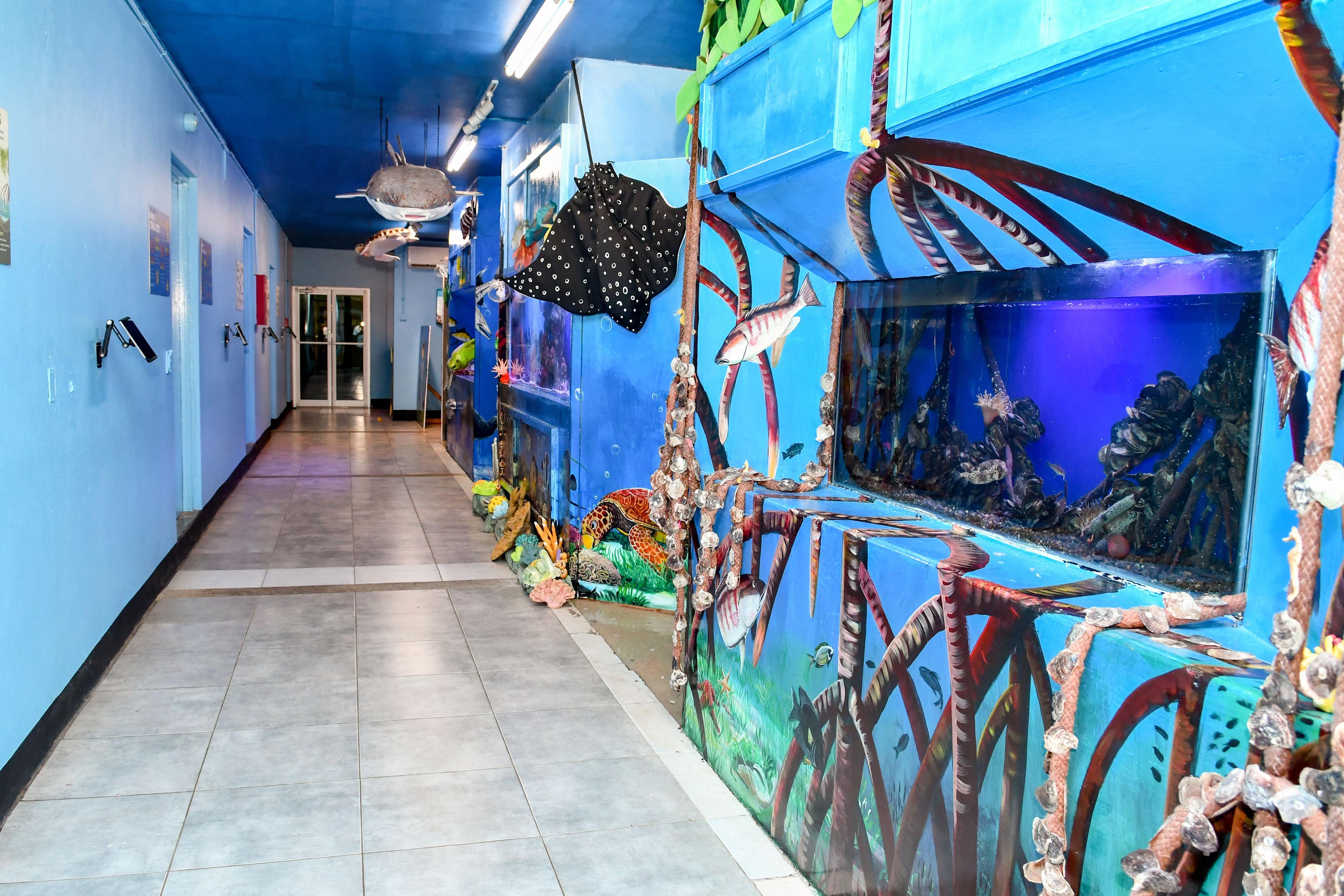
The ocean has come ashore. The University of the West Indies (UWI) Discovery Bay Marine Laboratory (DBML) and the Sandals Foundation have partnered to launch an immersive marine ecosystem hallway — the first of its kind on Jamaica’s North Coast — transforming a traditional corridor into a living journey through the island’s underwater worlds.
From the depths of the deep sea to vibrant coral reefs and intricate mangrove forests, the installation features live aquaria, large-scale 3D marine species models, authentic coral skeleton displays, and research footage captured by UWI DBML divers along Jamaica’s north coast.
Valued at over JMD $4.2 million the investment also supports the facility’s wider outreach and education programme, providing upgrades to the Lab’s conference room with new furnishings to enhance the visitor experience, display screens for interactive learning, and modern retractable projector screen.
Speaking at the launch on Monday March 16, Dr. Camilo Trench, lecturer and academic coordinator at the UWI DBML says the project has been a lifelong dream to enhance the educational experience at the Lab. “The Hallway is an indication of our commitment to conservation and continued education in Marine Sciences. We aim to bring the sea and its diverse inhabitants closer to the curious minds of all ages. The features, adaptations, and nuances of these species are excellent teaching tools for STEM learning and inspire human thinking and innovation. We are thrilled that the Sandals Foundation afforded us the resources to fulfil this ambition.”
Interactive learning stations along the hallway have been strategically installed to deepen environmental education, allowing students to explore biodiversity through sight, sound, and touch to understand ecosystem connectivity, examine threats facing marine environments, and discover how they can help protect ocean health.
For Heidi Clarke, Executive Director of the Sandals Foundation, the project aligns with its mandate to nurture a sense of stewardship in the young. “Our oceans sustain livelihoods, protect our coastlines and support the natural beauty that defines the Caribbean,” Clarke said. “When young people are able to see and experience these ecosystems up close, they begin to understand just how vital they are to our future. This immersive hallway helps make that connection real. It allows students to move beyond textbooks and encounter the living systems that surround our island, while inspiring them to see themselves as guardians of the environment.”
Highlighting the importance of the space in advancing STEM education, Technical Development Officer at the Ministry of Education, Skills, Youth, and Information for Region 3, Dr. Latoya Morgan Smith, “When students explore coral reef health, analyze water quality, study marine biodiversity, or examine the impacts of climate change on coastal communities, they are not simply learning science, they are applying STEM to solve real problems affecting our island, the Caribbean region and the world. This space… will allow young Jamaicans to encounter science not as an abstract concept, but as a living exploration of the natural world.”
Kiandra Greyer of Discovery Bay Primary and Infant School described the experience with excitement. “I was amazed by the lionfish. It has so many spikes, colors and fins! Seeing all the marine life made me realize how important it is to protect the ocean. Without the corals and the different sea animals, we wouldn’t have the beautiful island we are supposed to have.”
According to the Food and Agriculture Organization of the United Nations (FAO), more than 600 million people worldwide rely on fisheries and aquaculture for their livelihoods, while over 3 billion people depend on marine and coastal biodiversity for food security and economic survival.
Here in the Caribbean, the International Coral Reef Initiative (ICRI) reports that at least 3 million people rely on fisheries for their livelihoods, while coral reefs generate an estimated US$3.4 billion annually through tourism, fisheries, and coastal protection.
As climate change, overfishing, and other human pressures intensify, the immersive hallway positions education as a powerful first line of defense — equipping the next generation with the knowledge, awareness, and sense of responsibility needed to safeguard Jamaica’s marine resources.