
- jamaica|
- education|
- October 2025
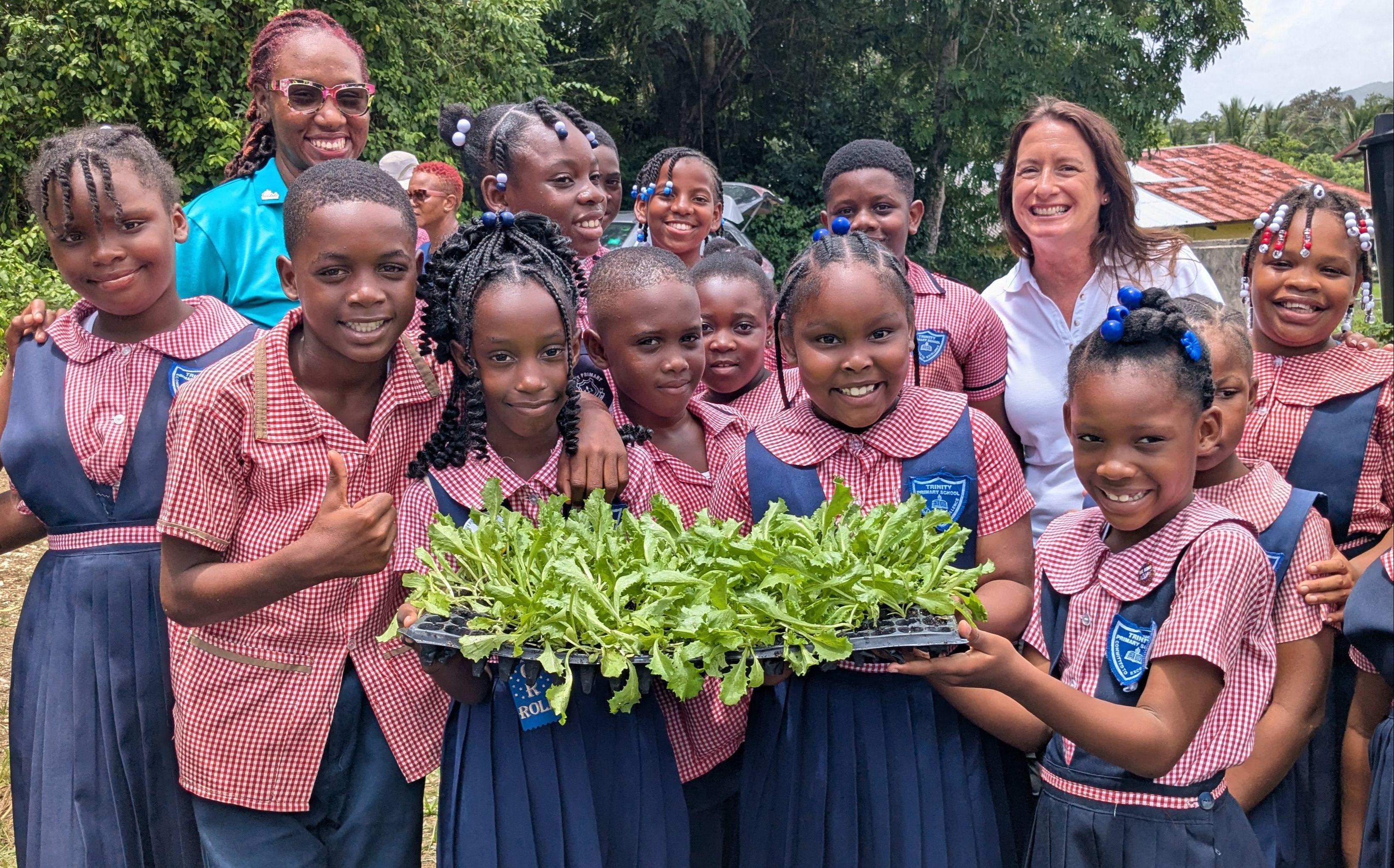
The Sandals Foundation has partnered with the St. Mary Ambassadors for Change (SMAC), donating 3 Million JMD for the implementation of the Aquatic Education and Food Security Project. This project aims to improve food security, promote sustainable farming, and provide innovative educational opportunities that empower the local entrepreneurs.
Aquaponics combines fish farming with vegetable cultivation by using hydroponics, a technique where plants grow in nutrient-rich water instead of soil to achieve faster growth and higher yields. This system works in a closed loop, where fish by-products fertilize the plants, and the plants purify the water.
As governments around the world seek to implement systems to address food security, the system, which has been installed at the Trinity Primary School, is set to produce about 2,250 pounds of tilapia every 6 months and 2,500 pounds of lettuce every 6 weeks. The supplies will supply the school feeding programme, providing nutritious and balanced lunches to its students. Excess production will then be sold to residents in surrounding communities, providing access to fresh fish and produce.
SMAC project manager Fabian Rhule is a step in the right direction. “The SMAC Aquaponics system is a catalyst for a brighter future for years to come. Developing our children’s minds while investing in our agricultural sector promises a more stable and secure Jamaica. This collaboration is testament to the significant contributions that can be made through strategic partnership”.
With the island’s drought conditions leaving residents and farmers grappling with reduced access to potable water, the newly installed system will reduce water dependence and conserve on the finite resource as it uses 90% less water than traditional farming methods. The infrastructure will also create an educational platform for teaching climate smart agricultural practices.
“This system not only addresses sustainable food supply but will create income-earning opportunities while developing the entrepreneurial skills of approximately 2000 residents,” says Rhule. “SMAC youth ambassadors will train more than 200 students, 15 educators, farmers, and youth group and community members. They will receive hands-on training in a living laboratory for sustainable agriculture, fostering innovation and interest in STEM fields, ultimately contributing to Jamaica’s blue economy.”
For Heidi Clarke, Executive Director at the Sandals Foundation, says investing in aquaponics is an investment in the island’s economy and sustainable development.
“The use of agricultural innovations and technologies such as aquaponics increases our capacity to meet our national food needs and creates more export opportunities to boost our economy. Adding that to the continued advancement of our country’s STEM education, positions Jamaica to stand boldly as any developed country,” says Clarke.
The Executive Director of the philanthropic organization says the foundation is committed to supporting projects that advance national policies and global goals. "Communities are stronger when they can feed themselves and shape their own economic paths while protecting their natural resources. We will continue to support local communities in implementing infrastructure that fosters innovation and adaptability.